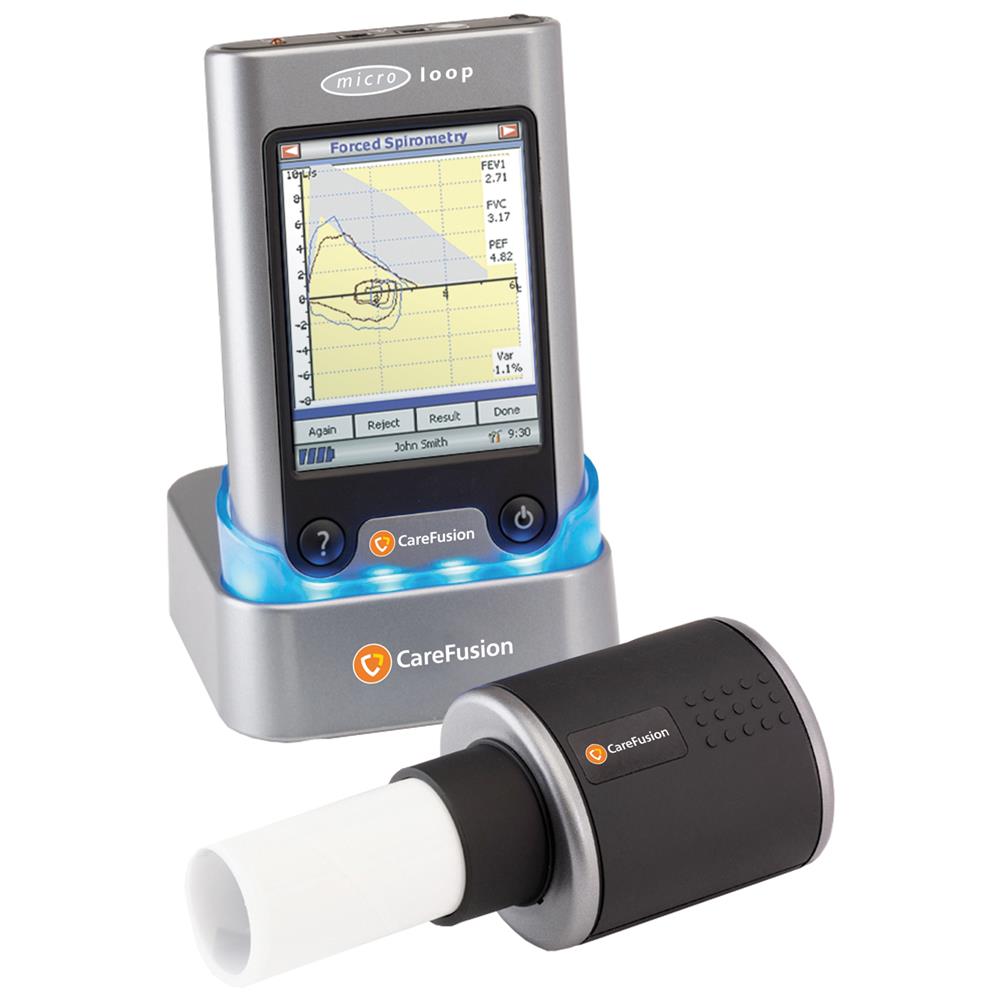
CareFusion MicroLoop Mk8 Handheld Spirometer with SPCS Software

Product Code: B100150

Product unavailable. Please contact us for information.
- High definition colour touch-screen
- Desktop docking station for battery charging and PC and printer connection
- Fast on-screen text entry enabling comments and report writing
- Fully customisable printout formats
- 2 Year Warranty
Our diagnostic solutions are designed to save you time and improve patient safety. This product is available with the following options:
Mediserve Support
This product is available with our unique MediServe support package, which includes unlimited technical support and a full aftercare service.
Find out more about Mediserve supportInstallation & Training
Our dedicated team can install and train you on this product at a time that is convenient for you.
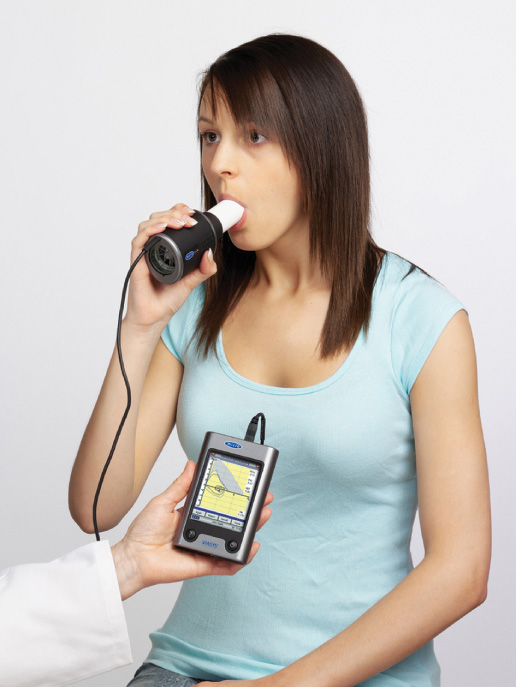
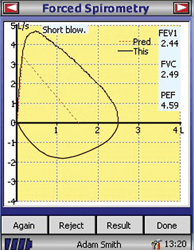
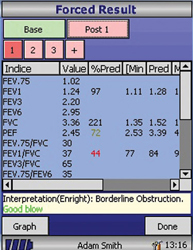
Find out more about install & trainingThe CareFusion MicroLoop MK8 Handheld Spirometer features a colour touchscreen that allows fast and accurate spirometry tests to be performed. Tests can be stored in the built in memory for later upload to the computer when necessary.
The MicroLoop spirometer comes with a desktop docking station for connection to a PC. It is compatible with the SPCS software.
Main Features
- Colour touch-screen
- Desktop docking station for battery charging and PC and printer connection
- Fast on-screen textual entry enabling comments and report writing
- Fully customisable printout format
TESTS PERFORMED: FVC, SVC, optional Pulse Oximetry
MEASUREMENTS: Forced (FVC),FEV1, FVC, PEF, FEV1/FVC, FEV6, VC, FEV.75,FEV3,FEV.75/VC,FEV.75/FVC, FEV1/VC, (FER), FEV3/VC,FEV3/FVC, FEV.75/FEV6, FEV1/FEV6, FEF25 (MEF75), FEF50,(MEF50), FEF75 (MEF25), FEF25-75 (MMEF),FEF50/VC,FEF50/FVC, MMEF/FVC (FEF25- 75/FVC), FIV1, FIVC, PIF,FIV1/FIVC (FIR), FIF25 (MIF75), FIF50 (MIF50), FIF75(MIF25), R50 (FEF50/FIF50), MET25-75, FET, MVV
Relaxed (SVC): VT (TV),Ti, Te, Ti/Ttot, EVC, IVC, IC, VT/Ti (TV/Ti), IRV, ERV, FR
Volume Range: 0.1 to 8L (Gold Standard Turbine 0.1 to 9.99L)
Flow Range: 0.2 to 15 L/s
Accuracy: +/- 3% to ATS Recommendations
SPIROMETRY PC SOFTWARE
Requirements: Microsoft Windows 2000, XP, 7
SPO2 Range/Accuracy: 0% to 100% ± 2 digits
Heart Range/Accuracy: 18-300bpm ± 1 digit
Test recording time: 20 sec - 60 min
Data Recording: SpO2: 3x %SpO2 per sec bpm: 3x HR per sec
General Storage: 2000+ patient tests including Flow/Volume loops and Volume/Timegraphs.
Power Supply: Input: 100-240V AC 50-60Hz Output: 12V 2,5A
Battery Pack: Rechargeable NiHm 8,4V 1100mAh
Dimensions: 25.5cm x 12cm x 3.5cm : Transducer 50mm x 60mm x 90mm
Transport and storage conditions
Operation Temperature: 0°C to 40°C (+32°F to +104°F)
Weight, excluding transducer: 660g
Operating Humidity: 30-90% non-condensing
Storage and Transport Temperature: -20°C to +70°C


MediServe
Keeping your equipment running smoothly is critical to the success of your practice. Numed Healthcare offer a complete product support package called MediServe. More about MediServe